The Chokepoint Doctrine: Five Thousand Years of Building Roads to Collect Rent on Them
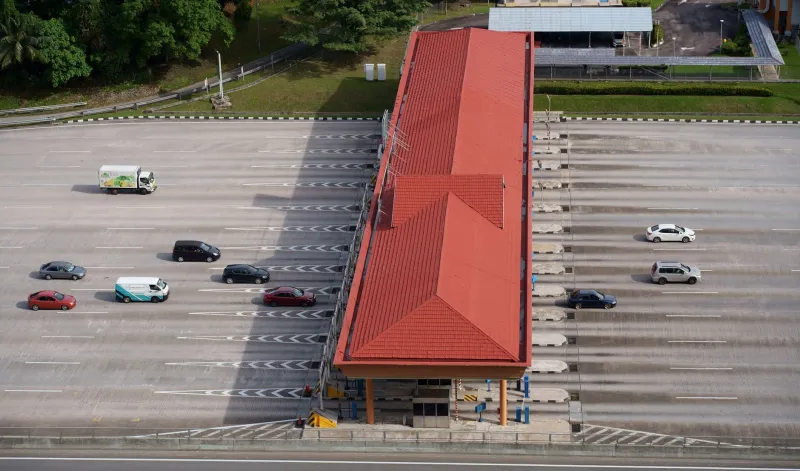
The Roman Empire built approximately 250,000 miles of road. Historians tend to describe this achievement in military and administrative terms — the roads moved legions, carried dispatches, and bound a continent-spanning state into something resembling coherent governance. All of that is true. What receives less attention is the financial architecture layered on top of that infrastructure almost immediately after construction: the portoria, a system of customs duties and transit taxes collected at bridges, mountain passes, river crossings, and city gates across the empire.
Rome built the roads. Rome then charged the people who needed the roads to use them. The revenue was substantial. The logic was simple. It has been replicated without meaningful variation for five thousand years.
Before Rome: The Chokepoint as Foundational Technology
The Roman system was not an innovation. It was an inheritance.
Egyptian pharaohs collected transit duties on Nile traffic as early as 3000 BCE. Mesopotamian city-states positioned themselves at river confluences and charged merchants for passage. The Phoenicians, whose maritime trade network spanned the Mediterranean, selected their colonial outposts with a precision that modern logistics consultants would recognize: Carthage, Cadiz, and Palermo were not chosen for their agricultural potential. They were chosen because they sat at the intersections of the sea lanes that Mediterranean commerce could not avoid.
The pattern is consistent enough to suggest something more fundamental than policy preference. When a society builds infrastructure — when it invests the collective labor and capital required to make movement or communication easier — it simultaneously creates a structural opportunity that is almost impossible to leave unexploited. The chokepoint is not a corruption of the infrastructure's purpose. In the historical record, it appears to be the purpose, or at least its inevitable companion.
The medieval period offers particularly clear examples because its infrastructure economics were unusually transparent. A feudal lord who built a bridge across a river owned the bridge and charged for its use. The toll was not hidden inside a tax code or bundled into a subscription fee. It was collected by a man standing at the gate with a ledger. The math was visible: build the crossing, control the crossing, extract from everyone who needs the crossing. The lord who controlled the Rhine crossing at a strategic narrows did not need to be a military genius or a skilled administrator. Geography had already done the work.
The Canal Interlude and the Railroad's Clarification
The 19th century is particularly instructive because it compressed several centuries of infrastructure economics into a few decades, allowing the underlying dynamics to become visible in something close to real time.
America's canal boom of the 1820s and 1830s followed the chokepoint doctrine faithfully. The Erie Canal, completed in 1825, did not merely connect the Great Lakes to the Atlantic seaboard. It made New York City the mandatory transit point for an enormous share of American commerce, a geographic advantage the city has not fully surrendered in the two centuries since. The canal's operators charged tolls. The cities along its route charged for warehousing, handling, and transshipment. The financial ecosystem that grew around the canal was, in structural terms, a distributed toll-collection system.
 Photo: Erie Canal, via 3.bp.blogspot.com
The railroads clarified the doctrine by fighting over it openly. The rate wars of the 1870s and 1880s — the battles between Cornelius Vanderbilt's New York Central, Jay Gould's various properties, and the Pennsylvania Railroad — were not primarily competitions over service quality or operational efficiency. They were competitions for control of chokepoints: the mountain passes, river crossings, and urban terminals that shippers could not avoid. Once a railroad controlled a chokepoint, it could price accordingly. The Interstate Commerce Commission was created in 1887 specifically because the railroads had demonstrated, beyond any legislative doubt, that unregulated chokepoint control produces extraction, not efficiency.
The Standard Oil trust, operating in the same era, applied identical logic to pipelines. Rockefeller's early insight was not primarily about refining efficiency. It was about pipeline control. Whoever owned the pipe between the Pennsylvania oil fields and the eastern refineries owned the oil business, regardless of who drilled the wells. The chokepoint, once secured, made everything upstream and downstream negotiable on the chokepoint owner's terms.
The Digital Toll Booth
The transition from physical to digital infrastructure has generated considerable commentary about the novelty of platform economics. The commentary overstates the novelty.
Cloud computing pricing — specifically the structure of Amazon Web Services, Microsoft Azure, and Google Cloud — replicates the chokepoint doctrine with a precision that would have been immediately legible to a medieval bridge lord. The compute and storage costs are, at this point, largely competitive. What is not competitive is the cost of moving data out of these platforms, a fee structure known in the industry as "egress pricing." AWS charges customers to put data in at minimal cost and charges them substantially to take it out. The bridge is free to cross in one direction. The toll is collected on the return.
This is not an accident of pricing strategy. It is the chokepoint doctrine applied to data architecture. Once a company's operational data — its customer records, its transaction histories, its machine learning training sets — resides in a cloud environment, the switching cost is not merely the egress fee. It is the entire organizational disruption of migration. The chokepoint is not the data center. It is the accumulated dependency.
The app store model follows identical logic. Apple and Google built the distribution infrastructure for mobile software, then positioned themselves as mandatory intermediaries between developers and users, collecting 15 to 30 percent of all revenue that passes through the gate. The Roman portoria collected between 2 and 5 percent. The rates have improved considerably for the toll collector over two millennia.
What the Pattern Predicts
The consistency of this history suggests several conclusions that hold regardless of the specific technology involved.
First, infrastructure investment and extraction are not sequential phases — they are simultaneous incentives. The entity that finances infrastructure construction is almost always thinking about toll revenue before the first shovel breaks ground. The public-private partnership model, now standard in American infrastructure finance, makes this explicit: private capital accepts construction risk in exchange for long-term toll rights. The medieval lord who built the bridge was operating the same model.
Second, regulatory intervention follows extraction predictably, and with predictable lag. The ICC arrived a decade after the railroad rate wars peaked. Antitrust scrutiny of platform pricing is arriving roughly a decade after the cloud and app store models became entrenched. The lag is not a regulatory failure. It is the normal tempo of institutional response to a problem that only becomes politically legible after its costs have been widely distributed.
Third, and most durably, the chokepoint migrates but does not disappear. When canal tolls became regulated, capital moved to railroads. When railroad rates were regulated, capital moved to pipelines, then to telecommunications infrastructure, then to digital platforms. The specific chokepoint changes with each technological generation. The underlying doctrine — build the thing people cannot avoid, then price accordingly — has not changed since the first Egyptian official positioned a tax collector on the Nile.
The spreadsheet, as noted, looks identical. The currency is different. The arithmetic is the same.