The Great Debasement: Five Millennia of Governments Lying About Money
The Oldest Government Lie
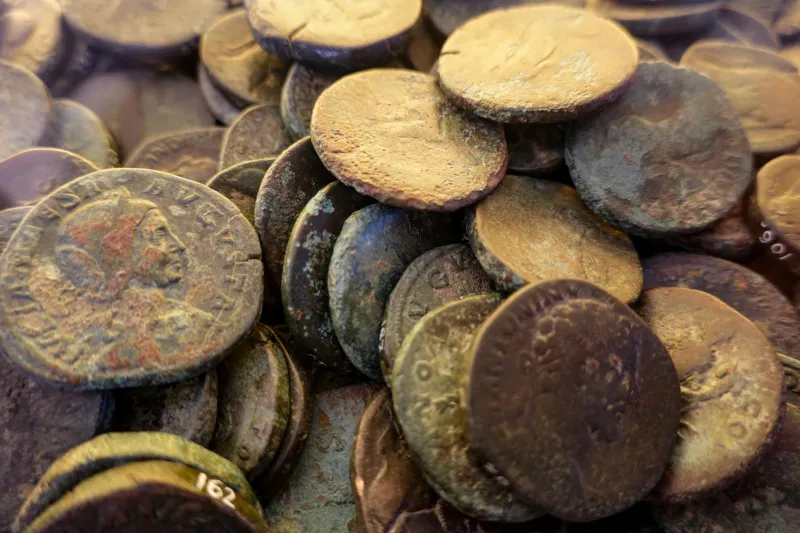
In 64 CE, Emperor Nero reduced the silver content of the denarius from 98% to 94%. He called it monetary reform. The Roman people called it what it was: theft. But Nero had discovered something that every financially distressed government since has learned: you can tax people without calling it a tax, and they'll figure it out too late to stop you.
 Photo: Emperor Nero, via s3.amazonaws.com
The denarius debasement wasn't Nero's innovation—it was his inheritance. Every Roman emperor facing fiscal pressure had shaved a little silver from the coins, always with elaborate justifications about monetary stability and economic necessity. By the time the empire collapsed, the "silver" denarius contained about 3% silver. The decline took centuries, but each step followed identical logic: the government needed money, raising taxes was politically dangerous, and currency debasement was invisible until it was irreversible.
The Medieval Refinement
Henry VIII perfected the debasement playbook during his break with Rome. Seizing monastery wealth provided temporary relief, but funding wars against France and Scotland required sustained revenue. Henry's solution was brilliant in its simplicity: he reduced the silver content of English coins from 92% to 25% over six years, calling it necessary monetary flexibility.
 Photo: Henry VIII, via www.atelevisao.com
The king's propaganda machine worked overtime to justify the debasement. Foreign wars required sacrifice from all subjects. Monetary reform would stimulate trade by making English goods more competitive. The reduced silver content would make coins more durable. Every excuse sounded reasonable until English merchants discovered that their money was worthless outside England.
Henry's debasement created England's first major inflation crisis, but also established the template for every subsequent currency manipulation: create a crisis that requires emergency measures, implement those measures gradually to avoid shock, and blame the inevitable consequences on external enemies or economic forces beyond government control.
The Printing Press Revolution
Paper money transformed debasement from a physical process of metal reduction to an abstract process of quantity expansion, but the psychology remained identical. Governments could create money without the inconvenient metallurgy, but they still needed justifications for what remained fundamentally the same theft.
The Continental Congress during the American Revolution pioneered modern monetary propaganda. Continental dollars weren't printed money—they were "bills of credit" backed by future tax revenue from a victorious republic. The inflation that made "not worth a Continental" a synonym for worthlessness wasn't government failure—it was the cost of freedom.
France's assignats during the Revolution followed the same pattern with more sophisticated justifications. The paper currency was backed by seized church lands, making it real estate-based money rather than fiat currency. When assignat inflation destroyed French savings, the government blamed speculators, foreign enemies, and insufficient patriotism rather than the printing presses running twenty-four hours a day.
The Twentieth Century Acceleration
World War I marked the end of pretending that currency debasement was temporary emergency policy. Every major power suspended gold convertibility, printed money to fund the war, and discovered that the economic benefits of inflation—reduced debt burdens, increased employment, competitive devaluation—outweighed the political costs of admitting what they were doing.
Germany's Weimar inflation became the poster child for monetary excess, but it obscured a more important lesson: every participant in the war had inflated their currency, and most continued inflating after the war ended. Germany's hyperinflation was different in degree, not kind. The Weimar Republic simply pushed the logic of wartime monetary policy to its mathematical conclusion.
 Photo: Weimar Republic, via i.ytimg.com
The United States managed its inflation more skillfully, but the mechanism was identical. Between 1913 and 1920, the Federal Reserve increased the money supply by 400%. The inflation that followed wasn't acknowledged as deliberate policy—it was described as an unfortunate consequence of global economic disruption. American savers paid for the war through reduced purchasing power, but unlike explicit taxation, the cost was invisible until after it had been collected.
The Modern Sophistication
Quantitative easing represents the ultimate evolution of currency debasement: theft so sophisticated that its victims applaud it. Central banks don't print money—they conduct "monetary policy." They don't debase currency—they provide "liquidity support." They don't tax savers—they "stimulate aggregate demand."
The Federal Reserve's post-2008 policies followed the same logic as Nero's denarius debasement, but with infinitely more sophisticated propaganda. Asset purchases weren't money printing—they were "unconventional monetary policy" designed to support financial stability. The inflation that transferred wealth from savers to borrowers wasn't acknowledged as policy—it was described as an unfortunate side effect of necessary crisis response.
European Central Bank policies pushed the sophistication even further with negative interest rates. Savers weren't being robbed—they were being incentivized to invest in productive assets. The erosion of pension funds and insurance company reserves wasn't theft—it was creative destruction of inefficient capital allocation.
The Unchanging Psychology
Why does every government eventually choose currency debasement over honest fiscal policy? Because it works, politically and economically. Explicit taxation creates immediate opposition from identifiable victims. Currency debasement creates diffuse costs that are difficult to trace to specific policies, allowing governments to blame inflation on external forces while enjoying the benefits of increased spending power.
The victims of currency debasement—savers, pensioners, anyone holding fixed-income assets—are typically politically weak and economically unsophisticated. They understand that their money buys less, but they don't understand why. The beneficiaries—governments, borrowers, asset holders—understand exactly what's happening and have strong incentives to support the policy while denying its nature.
The Eternal Return
Every fiat currency in history has eventually been debased to worthlessness, but every generation acts surprised when it happens to them. The pattern is so consistent that it suggests something deeper than policy mistakes: currency debasement is the inevitable result of giving governments the power to create money.
Roman emperors, medieval kings, revolutionary governments, and modern central banks all discovered the same truth: when you can create money, you will create money, and when you create money, you will destroy its value. The justifications evolve with the times, but the mathematics are eternal.
The Next Chapter
Cryptocurrency represents an attempt to escape the debasement cycle by removing human discretion from monetary policy. Whether it succeeds depends on whether technology can overcome five thousand years of political economy. Governments facing fiscal pressure have always chosen the same solution, regardless of the constraints supposedly preventing them from doing so.
The lesson from five millennia of currency history is simple: if your government can debase your money, it will debase your money. The only question is whether they'll admit it while they're doing it or wait until after your savings are gone. Human psychology hasn't changed since Nero's denarius, and neither has the mathematics of monetary theft disguised as policy.