The Incumbent's Playbook: Labor Has Fought Every Disruption the Same Way for Eight Hundred Years
The Incumbent's Playbook: Labor Has Fought Every Disruption the Same Way for Eight Hundred Years
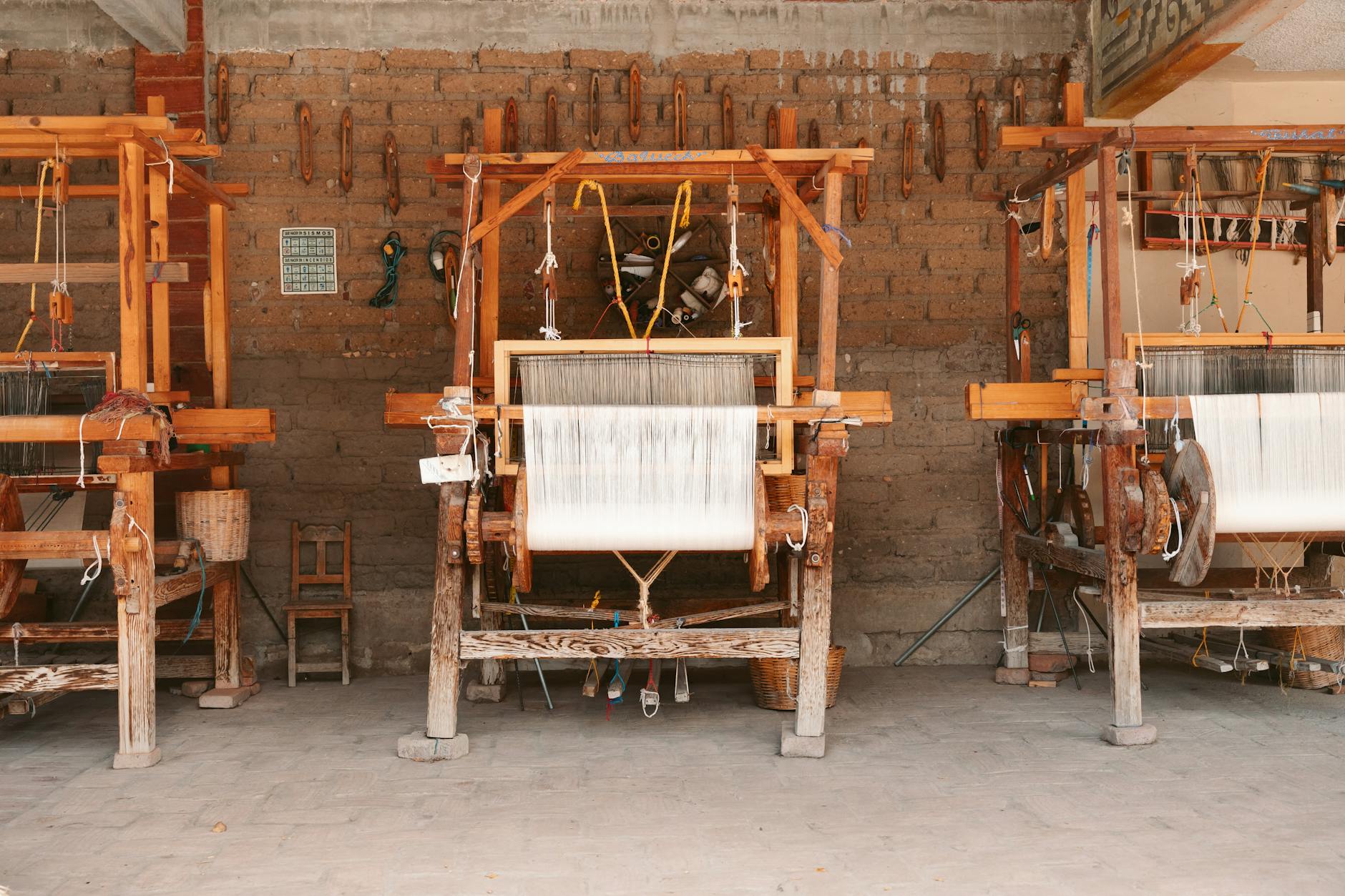
In 1396, the weavers of Cologne successfully petitioned city authorities to ban the use of the broad loom — a device that allowed a single operator to produce cloth at roughly twice the speed of a traditional narrow loom. The petition was granted. The broad loom was suppressed in Cologne for nearly two centuries.
This is not a story about ignorance or irrational fear. The Cologne weavers understood the broad loom perfectly. They understood it would halve the number of workers required per yard of cloth. They understood it would destroy the value of the skills they had spent years acquiring. And they understood that they had enough political leverage, in that moment, to stop it.
They were right on every count. The question worth examining is not why they fought, but why the fight always ends the same way.
Sunk Costs in Flesh and Time
To understand the guild system is to understand the economics of specialized human capital. A master weaver in fourteenth-century Florence had not merely learned a trade. He had spent approximately a decade as an apprentice, another several years as a journeyman, and had likely paid a substantial fee to join his guild. His skill was his only significant asset, and that asset was entirely illiquid. He could not redeploy it. He could not sell it. He could only use it to make cloth.
When a new technology or a new class of cheaper workers threatened to devalue that asset, his response was not irrational. It was the same response any rational economic actor makes when a sunk cost is threatened: fight to protect the conditions under which the original investment was made.
This is the throughline that connects the Cologne weavers to the English Luddites, who destroyed textile machinery between 1811 and 1816 not as a protest against technology in the abstract but as a targeted campaign against the specific machines that were being used to circumvent their wage agreements. It connects to the American labor movement's resistance to Taylorism and assembly-line fragmentation in the early twentieth century. It connects to the taxi medallion lobby's decade-long legal campaign against rideshare licensing. And it connects, with uncomfortable directness, to the current mobilization of writers, illustrators, voice actors, and other creative workers against generative AI.
The specific technology changes. The economic logic of the incumbent does not.
The Four Moves
Studying these episodes across eight centuries reveals a remarkably consistent tactical sequence. Incumbent labor groups, whether organized as guilds, unions, professional associations, or informal coalitions, tend to deploy the same four moves in roughly the same order.
The Quality Argument. The first line of defense is almost always a claim that the new method produces inferior output. The broad loom made coarser cloth. Factory-spun thread lacked the character of hand-spinning. Algorithmically generated illustrations lack the soul of human artistry. This argument is sometimes true, often partially true, and occasionally entirely false — but its validity is almost beside the point. Its function is to buy time and recruit allies among consumers and regulators who might otherwise be indifferent.
The Licensing Gambit. When quality arguments gain traction, the next move is to institutionalize them through credentialing requirements, licensing regimes, or mandatory quality standards that the new entrant cannot easily meet. Medieval guilds maintained this control through city charters. The American Medical Association used it to restrict physician supply for most of the twentieth century. Taxi medallion systems are a textbook example: they were framed as consumer protection mechanisms and functioned primarily as entry barriers.
The Political Campaign. Simultaneously or subsequently, incumbent groups seek direct legislative protection. The Luddites' machine-breaking coincided with parliamentary petitions demanding that frame-knitting be regulated. The Screen Actors Guild's current negotiations around AI likeness rights are, structurally, a legislative campaign conducted through contract bargaining. The goal is always the same: convert a temporary market advantage into a durable legal one.
The Absorption or Collapse. The final stage is binary. Either the incumbent group successfully integrates into the new order — typically by claiming jurisdiction over the new technology or the workers who operate it — or it is displaced entirely. Craft guilds that survived the Industrial Revolution generally did so by evolving into trade unions that organized factory workers rather than artisans. Those that refused to adapt were simply rendered irrelevant as their members aged out.
The AI Chapter
The current conflict over artificial intelligence in creative industries is, by this framework, somewhere between the second and third moves. Quality arguments are well established and partially persuasive. Licensing proposals — mandatory disclosure requirements, training data registries, AI-generated content labeling — are advancing in state legislatures and federal regulatory proceedings. The political campaign is intensifying.
What history suggests — and this is not a prediction, merely an observation about how the pattern has resolved before — is that the outcome will depend less on the strength of the moral argument and more on the speed of adoption relative to the durability of the political coalition. The Luddites lost not because they were wrong about the economic effects of mechanization, but because the machinery spread faster than Parliament was willing to act. The taxi medallion lobby, by contrast, held for nearly a decade in major US markets because it had decades of accumulated regulatory relationships to draw on.
The writers, illustrators, and voice actors fighting AI replacement today have something the Luddites did not: a sophisticated understanding of intellectual property law and a well-organized lobbying infrastructure. Whether that is sufficient to change the terminal chapter of a pattern that has repeated consistently for eight centuries is a question the annals have not yet answered.
But the annals do offer one consistent observation: the technology has never, in the end, been stopped. The terms of its adoption, however, have varied enormously. That variance is where the fight actually happens, and where the outcome actually matters for the people involved.
The Cologne weavers suppressed the broad loom for two hundred years. That is not a trivial achievement, even if it was not a permanent one.