When Kings Learned to Liquidate: Henry VIII's Monastery Raids as the First Modern Corporate Restructuring

When Kings Learned to Liquidate: Henry VIII's Monastery Raids as the First Modern Corporate Restructuring
In 1536, Henry VIII faced a problem familiar to any modern CEO: a massive debt burden, declining revenues, and institutional assets sitting idle on the balance sheet. His solution would have impressed any private equity partner on Sand Hill Road. Rather than raise taxes or cut spending, the Tudor monarch executed the largest corporate seizure in English history, liquidating an entire sector of the economy and redistributing the proceeds to political allies.
 Photo: Henry VIII, via images2.fanpop.com
The Balance Sheet Crisis
By the 1530s, England's monasteries controlled roughly one-third of the nation's wealth. These institutions owned vast estates, collected rents from thousands of tenants, and maintained what amounted to the medieval equivalent of a diversified investment portfolio. Meanwhile, Henry's treasury was hemorrhaging cash. Wars with France had drained the royal coffers, and his break from Rome had cut off lucrative papal revenues.
The mathematics were simple. The monasteries held assets worth approximately £200,000 annually — roughly $2 billion in today's purchasing power. Henry's annual revenues barely reached £100,000. Any modern turnaround specialist would have reached the same conclusion: the target was overcapitalized and underperforming.
The Acquisition Strategy
Henry's approach followed what private equity firms now call a "roll-up strategy." Rather than seize all monastic properties simultaneously, he began with the smaller houses, testing legal frameworks and public resistance. The Suppression of Religious Houses Act of 1535 targeted monasteries with annual incomes below £200 — the equivalent of acquiring underperforming regional players before moving on to market leaders.
The legal justification was masterful corporate spin. Royal commissioners conducted "due diligence" visits, documenting financial irregularities and moral failures that would justify closure. These reports read like modern forensic accounting: allegations of mismanaged funds, excessive executive compensation (lavish abbots' quarters), and failure to meet fiduciary obligations to stakeholders (neglect of charitable duties).
The Strip-and-Flip Model
Once acquired, Henry's administration followed a playbook that Kohlberg Kravis Roberts would recognize. Valuable assets were immediately liquidated: gold and silver objects melted down for cash, lead roofing stripped and sold, libraries dispersed or destroyed. The real estate portfolio was then restructured for maximum political return.
Prime properties went to key allies at below-market prices — the Tudor equivalent of management buyouts. Thomas Cromwell, Henry's chief restructuring officer, received Launde Abbey. The Duke of Norfolk acquired several East Anglian houses. These weren't gifts; they were strategic investments in political loyalty, creating a stakeholder class with vested interests in the new economic order.
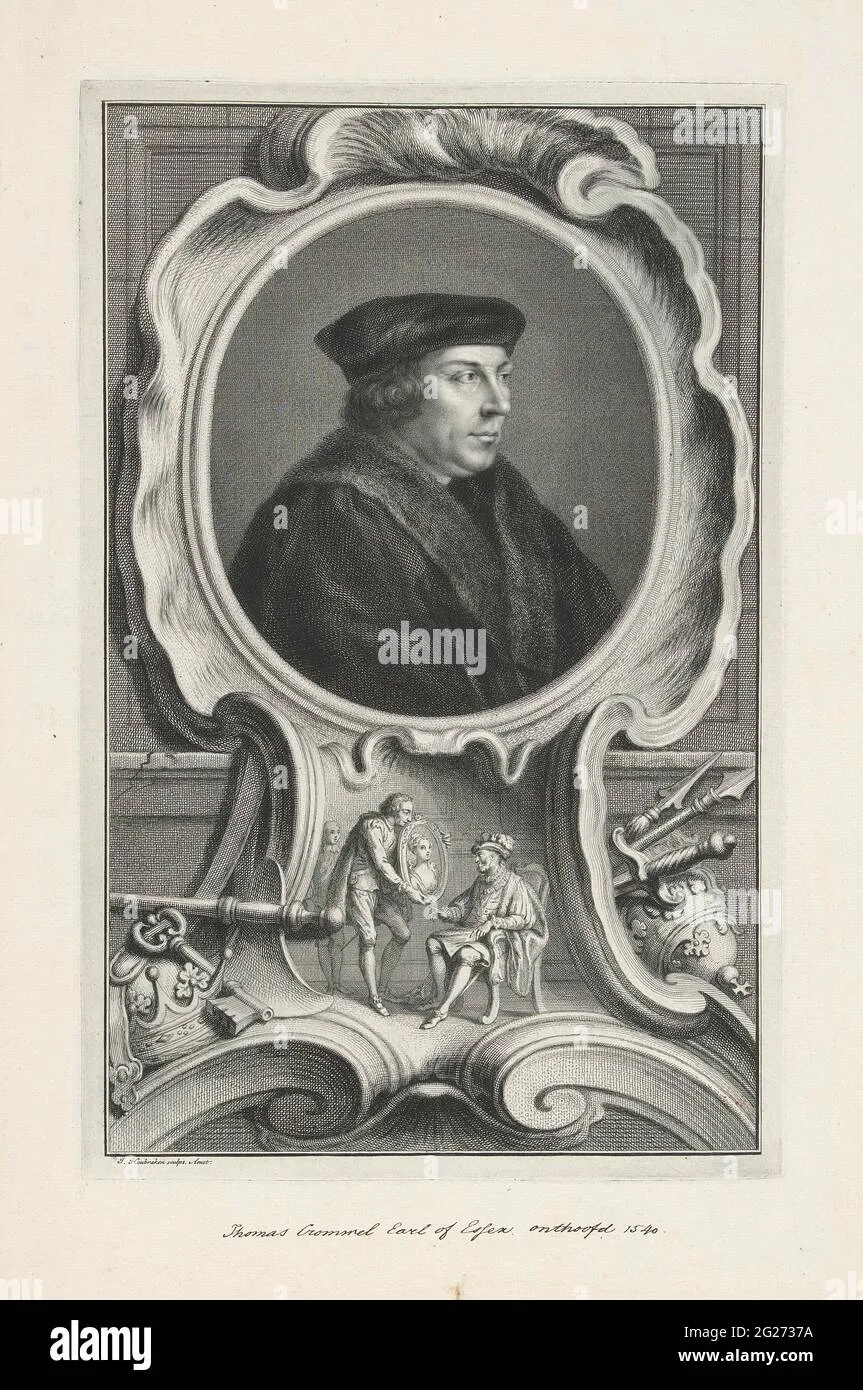 Photo: Thomas Cromwell, via c8.alamy.com
Less valuable properties were sold to emerging merchant families, creating a new landed gentry while generating immediate cash flow. This secondary market proved so robust that Henry's successors continued the strategy, liquidating collegiate churches and chantries throughout the 1540s.
The Human Capital Restructuring
Modern private equity firms euphemistically call it "rightsizing." Henry called it "dissolution." Approximately 10,000 monks, nuns, and lay employees lost their positions as the monastic system disappeared. Unlike today's severance packages, displaced religious received modest pensions — when they received anything at all.
The broader economic impact mirrored contemporary corporate consolidations. Traditional supply chains collapsed as monasteries stopped purchasing goods from local craftsmen. Charitable services that monasteries had provided — healthcare, education, poor relief — simply vanished, forcing communities to develop alternative solutions or do without.
The Regulatory Capture
Henry's restructuring succeeded because he controlled the regulatory environment. Parliament rubber-stamped the seizures, courts validated the transfers, and local officials enforced the transitions. The king had achieved what modern corporations can only dream of: complete regulatory capture, eliminating legal challenges before they could arise.
This wasn't accidental. Henry's team included England's most sophisticated legal minds, who crafted precedents that would govern property seizures for centuries. The doctrine of "corrupt surrender" — forcing institutional leaders to voluntarily transfer assets under legal pressure — became a template for future government acquisitions.
The Long-Term Returns
By 1540, Henry had extracted approximately £1.3 million from monastic liquidations — roughly six times his annual revenues. But the real value lay in the political restructuring. By creating a new class of property owners dependent on royal favor, Henry had fundamentally altered England's power dynamics.
The parallels to modern private equity are striking. Both strategies involve acquiring undervalued assets, stripping out costs, and redistributing ownership to aligned stakeholders. Both prioritize short-term cash extraction over long-term institutional stability. Both rely on regulatory frameworks that favor acquirers over existing stakeholders.
The Enduring Template
Five centuries later, the Tudor playbook remains remarkably current. When governments seize foreign assets during international disputes, when corporations restructure pension obligations in bankruptcy, when private equity firms liquidate retail chains — the underlying logic traces back to Henry's monastery raids.
The mechanics have evolved, but the psychology remains constant. Institutional wealth eventually attracts institutional predators, and legal frameworks inevitably emerge to legitimize the transfer. Henry VIII simply proved that with sufficient political will and legal creativity, any asset base becomes available for restructuring.
The monasteries never recovered. The wealth they had accumulated over centuries was redistributed in less than a decade, creating new fortunes while destroying old institutions. Modern shareholders might recognize the pattern: sometimes the most profitable strategy is simply to liquidate everything and distribute the proceeds.