Manufacturing Consent: Rome's Propaganda Machine and the Unchanging Playbook of Power
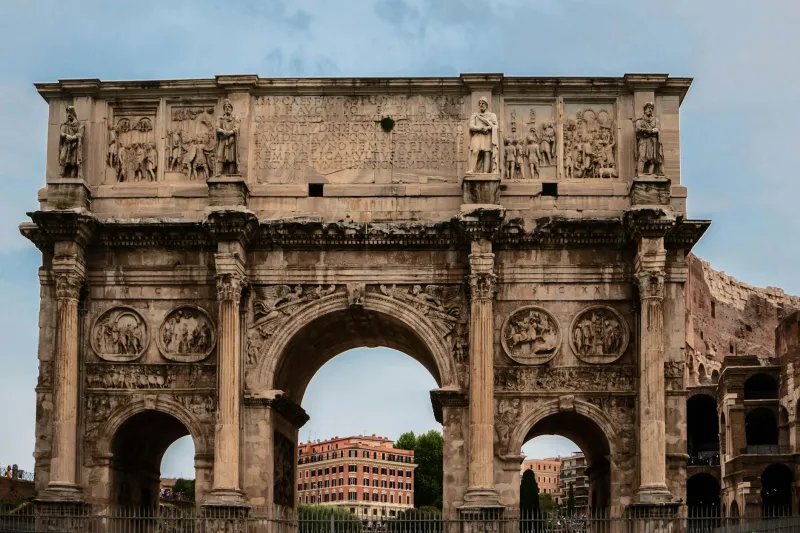
The Architecture of Inevitability
When Julius Caesar crossed the Rubicon in 49 BCE, Roman citizens didn't experience it as a military coup. They experienced it as the dramatic climax of a story they had been watching unfold for months through carefully orchestrated public spectacles, commissioned histories, and strategic leaks to sympathetic chroniclers. By the time Caesar's legions marched on Rome, the political class had already been conditioned to see his actions as historically inevitable rather than personally chosen.
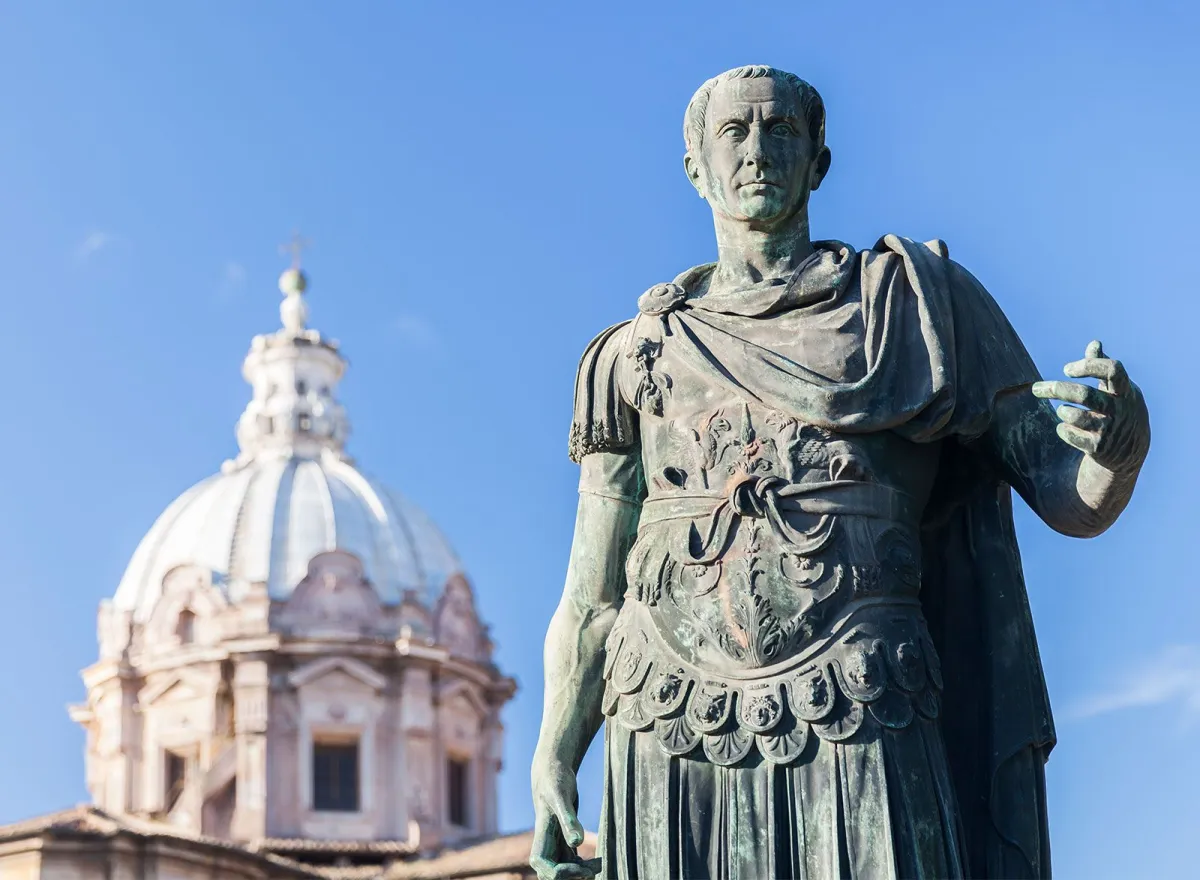 Photo: Julius Caesar, via cdn.britannica.com
This wasn't accidental. Roman leaders had spent centuries perfecting a propaganda infrastructure that could transform military aggression into cultural necessity, personal ambition into public duty, and conquest into liberation. The system was so sophisticated that it didn't feel like propaganda at all—it felt like reality.
The mechanics of that system have survived every technological revolution since the fall of Rome. The tools have evolved from temple inscriptions to television broadcasts to social media algorithms, but the underlying strategy remains identical: control the visual language, reward compliant storytellers, and bury dissent under spectacle until policy becomes indistinguishable from entertainment.
The Visual Language of Victory
Roman propaganda began with a simple insight: most people form political opinions through images rather than arguments. The average citizen couldn't read complex policy documents or follow nuanced debates about imperial strategy, but everyone could understand the symbolic meaning of a triumphal procession featuring enemy captives, exotic treasures, and victorious generals.
Triumphal processions weren't just celebrations—they were carefully choreographed political advertisements. Every element was designed to communicate specific messages about Roman power, divine approval, and the benefits of imperial expansion. The processions featured elaborate floats depicting battle scenes, displays of captured wealth, and parades of exotic prisoners that demonstrated Rome's reach across the known world.
More importantly, the processions established a visual template that made future wars seem like natural extensions of past victories. Citizens who had witnessed the triumph of one successful general were psychologically prepared to support the next military campaign, because the spectacle had programmed them to associate warfare with celebration, prosperity, and divine favor.
Modern political campaigns use exactly the same techniques. Convention speeches, rally staging, and candidate imagery are all designed to create visual associations between specific politicians and abstract concepts like strength, prosperity, or change. The technology has improved, but the psychological mechanisms are identical to those that made Roman triumphal processions effective.
The Historian's Dilemma
Rome also pioneered the practice of commissioning sympathetic historians to provide intellectual justification for military actions that had already been decided on purely strategic grounds. Wealthy patricians would sponsor scholars to write accounts that portrayed Roman expansion as defensive necessity, civilizing mission, or response to foreign aggression.
These commissioned histories weren't crude propaganda—they were sophisticated works of scholarship that used careful selection of evidence, strategic omission of inconvenient facts, and elegant rhetorical framing to make imperial policy appear historically inevitable. The historians weren't lying exactly; they were constructing narratives that emphasized certain aspects of complex events while downplaying others.
The practice created a self-reinforcing cycle: commissioned histories provided intellectual respectability for imperial policy, which generated more wealth for potential patrons, which funded more commissioned histories. Over time, the boundary between independent scholarship and state-sponsored narrative became effectively invisible.
Contemporary think tanks, policy institutes, and academic research centers operate according to precisely this model. Wealthy donors fund scholars to produce research that supports predetermined political positions, and the resulting work gains credibility through institutional affiliation rather than independent verification. The Roman innovation was recognizing that intellectual authority could be purchased and deployed as a political weapon.
Spectacle as Anesthesia
Roman leaders understood that the most effective way to neutralize political opposition wasn't to suppress it directly, but to make it irrelevant through overwhelming spectacle. Bread and circuses weren't just entertainment—they were sophisticated crowd control technology that channeled popular energy away from political participation and toward passive consumption.
The gladiatorial games, chariot races, and public festivals served multiple propaganda functions simultaneously. They demonstrated state power through massive logistical displays, provided emotional catharsis that reduced political tension, and created shared cultural experiences that reinforced social cohesion around imperial identity.
Most importantly, the spectacles operated on a scale that made individual political action seem meaningless by comparison. Citizens who might otherwise organize political movements instead found themselves emotionally invested in entertainment narratives that had no connection to actual governance.
Modern mass media serves exactly the same function. Professional sports, celebrity culture, and entertainment programming provide emotional satisfaction that reduces demand for political engagement, while the scale and sophistication of media production makes individual participation in public discourse feel futile.
The Coinage Campaign
Rome's most innovative propaganda tool was its currency system, which functioned as a distributed messaging network that reached every corner of the empire. Roman coins featured portraits of emperors, commemorations of military victories, and symbols of imperial ideology that reinforced state narratives through daily economic transactions.
The genius of monetary propaganda was its subtlety and ubiquity. Every commercial exchange became an opportunity for political messaging, but the messaging was embedded in economic activity rather than explicitly political communication. Citizens absorbed imperial ideology through routine transactions without recognizing it as propaganda.
Coinage also allowed Roman leaders to control historical narrative in real time. Coins commemorating military victories could be distributed before accurate information about those campaigns reached civilian populations, creating public perception that influenced how later events were interpreted.
Contemporary governments use similar techniques through currency design, postage stamps, and official symbols that appear on government documents and public buildings. The messaging is less direct than Roman imperial coinage, but the psychological mechanism is identical: embedding political narratives in routine activities until they become part of unconscious cultural background.
The Template Endures
What makes Roman propaganda particularly relevant is how completely it anticipated every subsequent development in political communication. The Romans understood that effective propaganda must operate across multiple channels simultaneously, combine emotional and intellectual appeals, and create the appearance of organic cultural consensus rather than top-down manipulation.
They also recognized that the most effective propaganda doesn't feel like propaganda at all—it feels like common sense, historical inevitability, or natural cultural expression. The goal wasn't to convince people to support specific policies, but to structure their perception of reality so that those policies would seem like obvious responses to objective circumstances.
Modern democratic societies have adapted these techniques to work within constitutional constraints and competitive political systems, but the fundamental approach remains unchanged. Political campaigns still use visual spectacle to create emotional associations, still commission sympathetic experts to provide intellectual justification for predetermined positions, and still rely on mass entertainment to channel popular energy away from direct political participation.
The technology has evolved from temple inscriptions to television to social media algorithms, but the psychological insights that made Roman propaganda effective remain constant because human psychology itself hasn't changed. People still form political opinions primarily through emotional rather than rational processes, still defer to apparent expert consensus, and still prefer entertainment to engagement.
Democracy's Inheritance
The uncomfortable truth is that every modern democracy has inherited Rome's propaganda infrastructure along with its political institutions. The techniques that Roman emperors used to manufacture consent for imperial expansion are now standard operating procedure for democratic politicians, corporate marketing campaigns, and advocacy organizations across the political spectrum.
The difference isn't that democratic societies have rejected Roman propaganda methods—it's that those methods now operate within competitive rather than monopolistic systems. Multiple factions use the same techniques simultaneously, creating an environment where propaganda competes with counter-propaganda rather than operating without opposition.
This competitive dynamic provides some protection against the most extreme forms of narrative manipulation, but it doesn't eliminate the underlying problem: democratic discourse increasingly resembles Roman spectacle, where citizens consume political entertainment rather than participating in actual governance.
The question facing contemporary democracies isn't whether they can escape the Roman template—it's whether they can adapt it to serve democratic rather than imperial purposes. The tools of mass persuasion are too powerful and too deeply embedded in modern communication systems to be abandoned entirely. The challenge is learning to use them in ways that enhance rather than undermine genuine political participation.
The Romans built their propaganda machine to serve empire. Whether democracies can rebuild it to serve democracy remains an open question.