The Medici Didn't Lose Their Bank to Bad Luck. They Engineered Its Failure Through a Structural Flaw Silicon Valley Is Repeating Right Now.
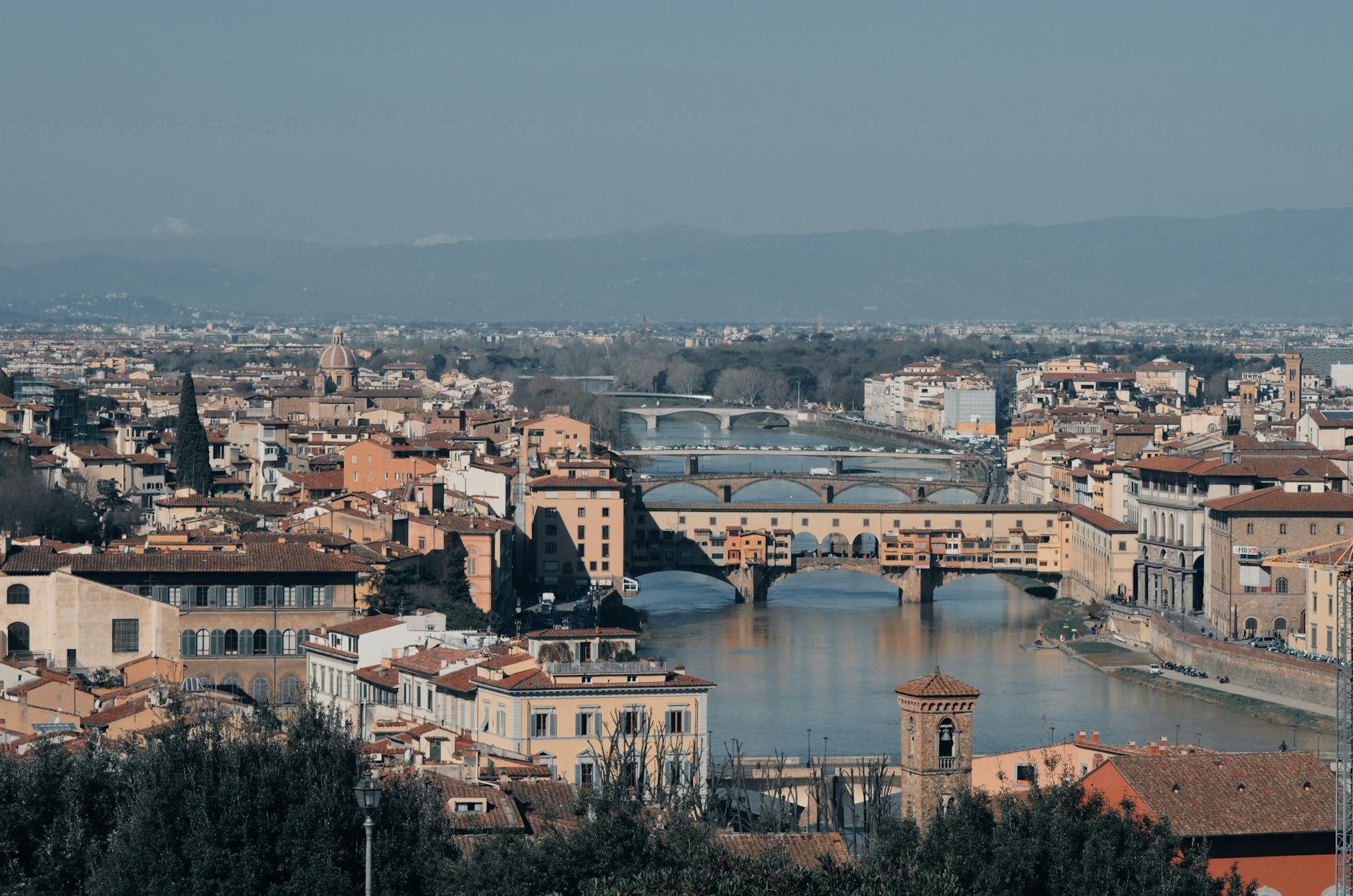
The Medici Didn't Lose Their Bank to Bad Luck. They Engineered Its Failure Through a Structural Flaw Silicon Valley Is Repeating Right Now.
For nearly a century, the Medici Bank was the most sophisticated financial institution in the Western world — a lender to popes and kings, a pioneer of double-entry bookkeeping, and a model of commercial innovation that would not be matched for generations. It also destroyed itself, gradually and then all at once, through a management structure that prioritized the autonomy of branch managers over accountability to the institution. The specific failure mechanism has a name in modern economics. It also has a very contemporary address.
What the Medici Actually Built
The popular image of the Medici family is inseparable from the art they commissioned and the political power they accumulated — Botticelli's canvases, Michelangelo's patronage, the papacies they effectively purchased. But for most of the fifteenth century, all of that cultural and political influence rested on a foundation that was, at its core, a banking operation of remarkable sophistication.
Founded by Giovanni di Bicci de' Medici in 1397, the bank grew into a network of branches spanning Florence, Rome, Venice, Geneva, Bruges, London, and several other commercial centers. Each branch was structured as a separate legal partnership — a deliberate design choice that limited the liability of the Medici family itself while allowing the network to operate across jurisdictions with different legal systems and regulatory environments. The Rome branch, which handled Vatican finances, was typically the most profitable. The London branch, which financed the wool trade and eventually became entangled in the Wars of the Roses, would prove the most consequential failure.
At its peak, under the management of Cosimo de' Medici, the bank was arguably the most important financial institution in Europe. It had developed sophisticated instruments for moving money across borders without physically transporting coin — a critical innovation in an era when roads were dangerous and currency exchange was treacherous. It had refined double-entry bookkeeping into something approaching a modern accounting system. And it had built a reputation for reliability that made it the preferred banker of the papacy, the preferred lender of monarchs, and a trusted counterparty for merchants from Lisbon to Constantinople.
The Structure That Looked Like Strength
The branch partnership model was, in many respects, genuinely innovative. By making each branch a separate legal entity with its own local managing partner — a fattore — the Medici could attract talented managers who had a direct financial stake in the performance of their specific operation. The branch manager shared in profits. He also, at least in theory, shared in losses. This was the original performance-aligned compensation structure, implemented in the 1400s.
But the model contained a flaw that became more dangerous as the family's direct managerial attention weakened. The branch managers had strong incentives to generate short-term profits — their compensation depended on it. They had much weaker incentives to manage risk conservatively, because the downside of catastrophic losses fell primarily on the Medici family itself, not on the local partner who had originated the bad loans. The partner could lose his investment in the branch. The Medici could lose the entire institution.
This is the principal-agent problem in its purest historical form. The agent — the branch manager — acts in ways that serve his own interests, which are not perfectly aligned with the interests of the principal — in this case, the Medici family as owners of the broader network. The misalignment was not accidental or the result of negligence. It was built into the structure.
How It Actually Collapsed
The deterioration of the Medici Bank was not a sudden event. It was a slow accumulation of decisions made by branch managers who were optimizing for their own positions rather than the health of the institution.
The London branch's trajectory is the clearest case study. Under the management of Francesco Sassetti — who simultaneously served as the bank's general manager and was notably reluctant to impose discipline on branch operations that were generating his own bonuses — the London branch extended enormous loans to Edward IV of England to finance his military campaigns. The loans were politically connected, difficult to refuse, and essentially impossible to collect on when Edward's fortunes shifted. The branch also extended credit to English wool merchants on terms that reflected optimism about commodity prices rather than rigorous credit analysis.
Sassetti knew the London branch was in difficulty. The historical record makes this clear. His response was to avoid forcing a reckoning that would have required him to acknowledge losses on his own watch. He rolled over bad loans, accepted new collateral of dubious value, and allowed the branch to continue operating in ways that obscured the true state of its balance sheet from the Florence headquarters.
The Bruges branch followed a similar pattern. So, eventually, did several others. By the time Lorenzo de' Medici — brilliant as a political operator and cultural patron, far less engaged with the details of banking than his grandfather Cosimo had been — recognized the full scale of the problem, the institution's capital had been substantially eroded by a decade of losses that branch managers had every incentive to conceal.
The bank did not collapse in a single dramatic failure. It shrank, branch by branch, through a combination of bad loans, political disruption, and the gradual withdrawal of confidence by depositors and counterparties who could see the warning signs. By the end of the fifteenth century, the institution that had once financed the papacy was effectively gone.
The Business School Case Study That Isn't Being Taught
Most MBA programs treat the principal-agent problem as an abstract concept to be illustrated with contemporary corporate examples — executive compensation structures, the separation of ownership and management in public companies, the incentive misalignments that contributed to the 2008 financial crisis. These are legitimate illustrations. They are also, in a meaningful sense, less instructive than the Medici case, because the Medici case strips away the complexity of modern financial instruments and regulatory environments to reveal the mechanism in its simplest form.
A family with substantial capital and a valuable reputation delegated the management of that capital to agents whose interests were not fully aligned with theirs. Those agents, operating with significant autonomy and limited oversight, made decisions that served their short-term interests at the expense of the institution's long-term health. The family's declining direct engagement with operations allowed the misalignment to persist long past the point at which it might have been corrected. The institution was eventually destroyed by the accumulation of those decisions.
You do not need a derivatives market or a securitization structure to produce this outcome. You need only a principal who is insufficiently attentive and agents who are insufficiently accountable.
The Contemporary Footnote
Silicon Valley's current enthusiasm for what is variously described as "founder autonomy," "flat management," or "high-trust organizational culture" reflects a genuine insight about the costs of bureaucratic oversight — the way that excessive control structures slow decision-making, frustrate talented people, and produce the kind of institutional timidity that allows more aggressive competitors to win markets.
This insight is not wrong. But it is incomplete in precisely the way the Medici branch model was incomplete. Autonomy without accountability does not produce innovation. It produces a structure in which agents with significant operational freedom make decisions that serve their own interests — in compensation, in credit, in risk tolerance — while the costs of those decisions are borne by the principals: investors, employees, and eventually customers.
The Medici had six hundred years less economic theory available to them than today's venture capitalists and startup boards. They could perhaps be forgiven for not anticipating how the structural incentives they had created would play out over decades. The same excuse is somewhat less available to investors who have read the case studies, attended the lectures, and watched the pattern repeat across multiple business cycles.
The historical record is not ambiguous about what happens when principals stop paying attention to what their agents are actually doing. It has never been ambiguous about this. The Medici simply provided one of the earlier and cleaner documented examples of a lesson that has been available for considerably longer than business schools have existed to teach it.