The Employer's Ancient Art of Keeping the Money: Five Millennia of Wage Theft Disguised as Business Practice

When the Pharaoh's Contractors Discovered Cash Flow Management
Papyrus Strike, housed in the Egyptian Museum in Turin, documents something remarkable: the first recorded labor dispute in human history. In 1170 BC, workers building royal tombs in Deir el-Medina walked off the job because their grain wages hadn't been paid for months.
 Photo: Papyrus Strike, via i.pinimg.com
 Photo: Deir el-Medina, via c8.alamy.com
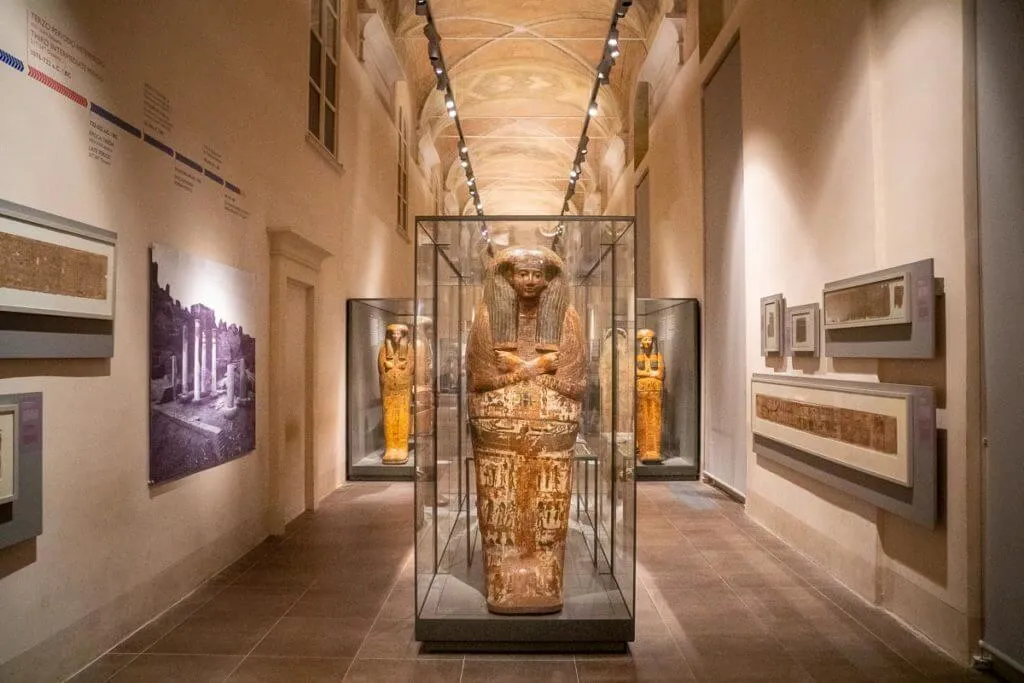 Photo: Egyptian Museum in Turin, via thebestofturin.com
The foreman's response, preserved in hieroglyphic detail, reads like a modern HR playbook. He blamed supply chain disruptions. He cited administrative delays beyond his control. He promised the payments were "in process" and asked workers to be patient while the bureaucracy sorted itself out.
The workers weren't buying it. They'd heard these excuses before.
The Mathematics of Delayed Payment
What the Egyptian papyrus reveals isn't just the first strike—it's the first documentation of a systematic business practice that has remained unchanged for five thousand years. When employers control the payment mechanism, the incentive to delay payment is mathematically irresistible.
Consider the economics from the foreman's perspective. Every month of delayed wages represents free capital that can be invested, lent, or used to cover other expenses. The workers, meanwhile, have no recourse except to continue working or abandon their investment in the job entirely.
This dynamic hasn't changed. Modern employers use different mechanisms—payroll processing delays, classification disputes, "training periods"—but the underlying calculation remains identical. When labor has limited outside options, the cost of underpayment is lower than the cost of prompt payment.
Medieval Innovations in Payment Avoidance
Medieval guild records reveal increasingly sophisticated methods of wage manipulation. Masters developed the "truck system," paying workers in goods rather than currency, then overcharging for those goods at company stores. They created elaborate apprenticeship hierarchies that kept workers in unpaid training positions for years.
The justifications were remarkably modern. Masters argued that delayed payment taught workers fiscal responsibility. They claimed that immediate compensation would encourage laziness and job-hopping. They positioned wage delays as character-building exercises rather than profit-maximizing strategies.
English court records from the 14th century show workers filing complaints that read like modern wage theft lawsuits: hours worked but not recorded, promised bonuses that never materialized, and mysterious "deductions" for tools and materials that workers never received.
The American Innovation: Making Theft Legal
America's contribution to the global wage theft tradition was regulatory capture disguised as worker protection. The Fair Labor Standards Act of 1938 established minimum wage requirements—but also created exemptions so numerous that they swallowed the rule.
Agricultural workers, domestic workers, and "executive" employees were excluded from overtime protections. These weren't accidental oversights. They were deliberate carve-outs that preserved employer flexibility while creating the appearance of worker protection.
The pattern has repeated with every subsequent labor law. The Family and Medical Leave Act created unpaid leave rights—but only for workers at companies with more than 50 employees who had worked more than 1,250 hours in the previous year. The Affordable Care Act required employer health insurance—but only for "full-time" workers, creating massive incentives to keep employees just below the threshold.
The Gig Economy: Ancient Techniques, Modern Platforms
Uber, DoorDash, and other platform companies didn't invent independent contractor classification—they just scaled it. The technique of avoiding employment obligations by reclassifying workers as independent businesspeople dates back to ancient Rome, where wealthy citizens used "freedmen" to conduct business while avoiding direct legal liability.
The Roman system worked because freedmen had limited legal recourse and few alternative income sources. The modern gig economy works for identical reasons. Workers classified as independent contractors lose access to minimum wage protections, overtime pay, workers' compensation, and unemployment insurance.
The justifications are remarkably consistent across millennia. Roman masters claimed they were providing freedmen with entrepreneurial opportunities. Modern platform companies make identical arguments about driver "flexibility" and "being your own boss."
The Technology of Wage Theft
Modern wage theft has become increasingly sophisticated, but the core techniques remain ancient. Time clock manipulation—requiring workers to clock out during slow periods—is just a digital version of the medieval practice of paying piece rates during peak production periods only.
Automatic payroll deductions for uniforms, tools, or "training" echo the truck system's company store markups. Mandatory unpaid training periods mirror apprenticeship structures that kept workers in unpaid positions indefinitely.
The innovation isn't in the methods—it's in the scale. Walmart's alleged practice of requiring employees to work through breaks affects millions of workers. Amazon's classification of warehouse workers as exempt from overtime protections creates systematic wage theft across hundreds of facilities.
The Enforcement Theater
Government enforcement of wage laws follows a predictable pattern that Egyptian workers would recognize. Agencies announce high-profile investigations, collect modest fines, and negotiate settlement agreements that don't require admission of wrongdoing.
The Department of Labor recovered $322 million in stolen wages in 2019—a number that sounds impressive until you realize it represents a tiny fraction of estimated wage theft. The Economic Policy Institute calculates that workers lose $50 billion annually to wage theft, making it more costly than all other forms of property crime combined.
The enforcement system isn't broken—it's working exactly as designed. Like the Egyptian foreman's promises to "look into" the payment delays, modern enforcement provides the appearance of accountability without the substance.
Why Workers Keep Working
The most remarkable consistency across five millennia of wage theft is worker persistence. Egyptian tomb builders continued working despite unpaid wages. Medieval apprentices endured years of unpaid labor. Modern gig workers accept below-minimum-wage effective pay rates.
The explanation isn't Stockholm syndrome—it's rational economic calculation. Workers with limited alternatives face a binary choice: accept underpayment or accept unemployment. The employer's advantage isn't just financial—it's informational. Employers know exactly how much they're saving through wage manipulation. Workers can only guess at what they're losing.
This asymmetry ensures that wage theft remains profitable even when it's technically illegal. The expected cost of getting caught—modest fines, delayed enforcement, negotiated settlements—is lower than the guaranteed benefit of keeping workers' money.
The Unchanging Calculation
What five thousand years of documented wage theft reveals isn't employer villainy—it's structural inevitability. When one party controls both the work process and the payment mechanism, and when the other party has limited alternatives, the mathematical incentive to underpay becomes irresistible.
The mechanisms evolve—grain payments become hourly wages become algorithmic piece rates—but the underlying power dynamic remains fixed. The Egyptian foreman's excuses sound familiar because they're addressing the same fundamental tension that exists whenever labor meets capital.
The question isn't whether employers will try to underpay workers. History suggests they always will. The question is whether societies will structure their economies to make wage theft profitable or costly. So far, the answer has been remarkably consistent across cultures and centuries.