When Governments Buy Out Their Own Monsters: The East India Company's Perfect Exit Strategy

The Ultimate Corporate Bailout
When the British government seized control of the East India Company in 1858, newspapers called it accountability. Parliament framed it as reform. The public celebrated it as justice served against corporate excess. They were all wrong.
 Photo: East India Company, via static.vecteezy.com
What actually happened was the most sophisticated exit strategy in corporate history—a template that would be repeated across industries and centuries whenever private enterprises grew too large, too controversial, or too systemically important to fail cleanly.
The East India Company hadn't been punished. It had been rescued.
From Private Army to Public Payroll
By 1857, the Company controlled more territory than most European nations, maintained armies larger than Britain's own military, and generated revenues that dwarfed the Crown's domestic budget. When the Indian Rebellion erupted that year, threatening this vast commercial empire, the Company faced a choice familiar to modern executives: absorb catastrophic losses or find someone else to pay the bills.
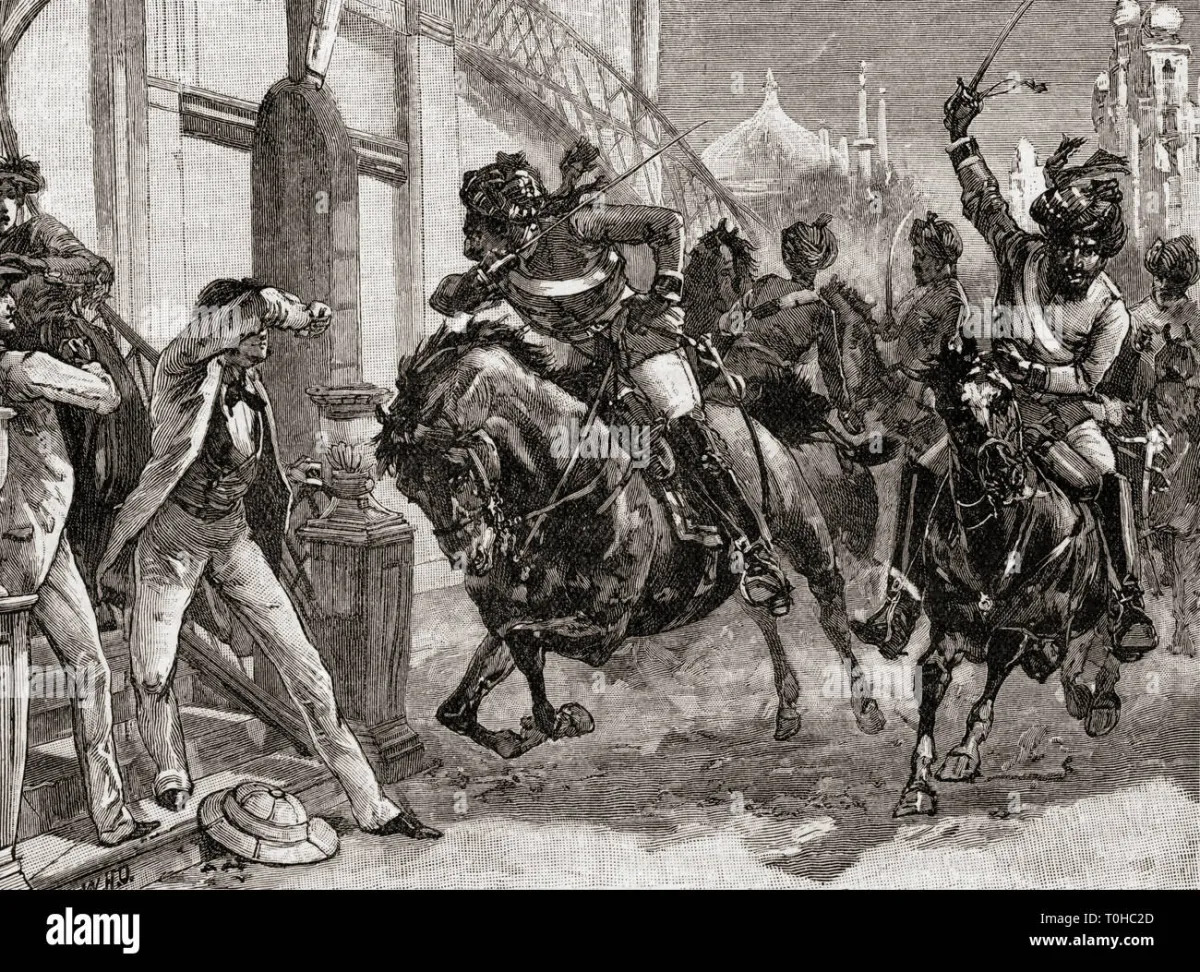 Photo: Indian Rebellion, via c8.alamy.com
The solution was elegant in its simplicity. Rather than liquidate assets or declare bankruptcy, Company leadership orchestrated their own nationalization. The Government of India Act 1858 transferred all Company territories, armies, and administrative functions to the British Crown—but crucially, it also transferred the Company's debts, pension obligations, and ongoing operational costs to British taxpayers.
Meanwhile, the men who had built and operated this private empire didn't disappear. They simply changed employers. Former Company executives became Colonial Office administrators. Company military officers received commissions in the new Indian Army. The same networks that had extracted wealth through private channels now did so through public ones.
Charles Wood, who authored the nationalization legislation, had previously served on the Company's board. His replacement as Secretary of State for India was also a former Company director. The institutional capture was so complete that contemporaries joked about whether the Company had taken over the government or vice versa.
 Photo: Charles Wood, via images.squarespace-cdn.com
The Regulatory Capture Playbook
This pattern—private profits followed by public bailouts, orchestrated by the same individuals who created the original problems—has repeated across every major economy for the past two centuries. The railroad barons of the 1870s used identical tactics when their speculative empires collapsed. Defense contractors perfected the model during both World Wars. Banking executives refined it during the 2008 financial crisis.
The psychological drivers remain constant because human nature hasn't changed. People who accumulate enough wealth and influence to capture entire industries don't suddenly develop civic virtue when their enterprises face existential threats. They use their accumulated power to socialize losses while privatizing any remaining gains.
Consider the modern parallels. When major banks faced insolvency in 2008, the solution wasn't liquidation—it was nationalization through bailouts, followed by the appointment of former bank executives to Treasury positions. When defense contractors exceed budget projections by billions, the response isn't contract cancellation—it's renegotiation and expanded scope.
The East India Company model works because it exploits a fundamental asymmetry in democratic governance. Private enterprises can move quickly and decisively. Public institutions must operate through committees, hearings, and legislative processes. By the time democratic oversight catches up to corporate overreach, the captured industry has usually grown too large to fail without systemic consequences.
The Modern Company Town
Today's technology platforms have achieved something the East India Company never managed: direct control over the information infrastructure that shapes public opinion about their own regulation. When contemporary executives testify before Congress about antitrust concerns or privacy violations, they're playing the same game Company directors played before Parliamentary committees in the 1850s—running out the clock until public attention moves elsewhere.
The fundamental equation hasn't changed. Private entities that grow large enough to threaten public welfare will eventually be absorbed by public institutions. But the absorption process will be managed by the same people who created the original threat, ensuring continuity of extraction under new institutional arrangements.
The Inevitable Cycle
The East India Company's nationalization established a template that transcends industries and eras because it exploits permanent features of human psychology and institutional design. Private actors will always push boundaries until they face existential threats. Democratic governments will always choose bailouts over chaos when presented with binary choices. And the individuals with enough influence to create systemic risks will always have enough influence to shape their own rescue terms.
Understanding this cycle doesn't prevent its repetition—it just helps observers recognize which stage they're witnessing. When private enterprises grow large enough to threaten public welfare, nationalization becomes inevitable. When nationalization occurs, privatization of benefits under public management becomes equally inevitable.
The East India Company's executives understood this dynamic perfectly. They didn't fight nationalization—they designed it. Their successors across every industry have been taking notes ever since.