The Extraction Blueprint: What Leopold's Congo Taught American Industry About Total Control

The Honest Prospectus
In 1885, Leopold II of Belgium received international recognition for the Congo Free State, a territory seventy-six times the size of Belgium itself. What emerged was not a colony in any traditional sense, but rather the world's most transparent corporate entity—a vertically integrated extraction business operating with complete regulatory immunity and zero labor costs. The horror of Leopold's regime has overshadowed a uncomfortable truth: its basic operating model was admired and studied by American industrialists who saw past the atrocities to the underlying business logic.
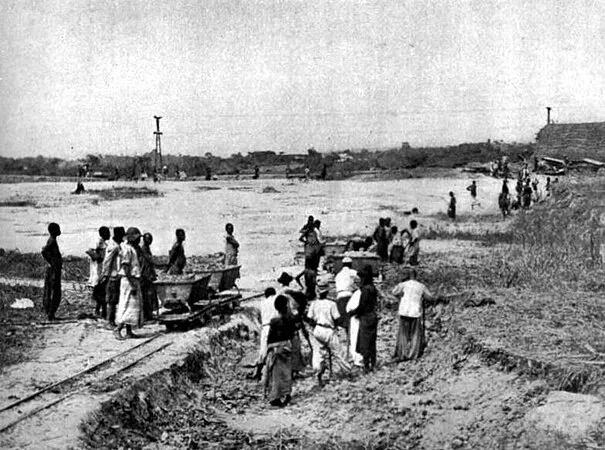 Photo: Congo Free State, via upload.wikimedia.org
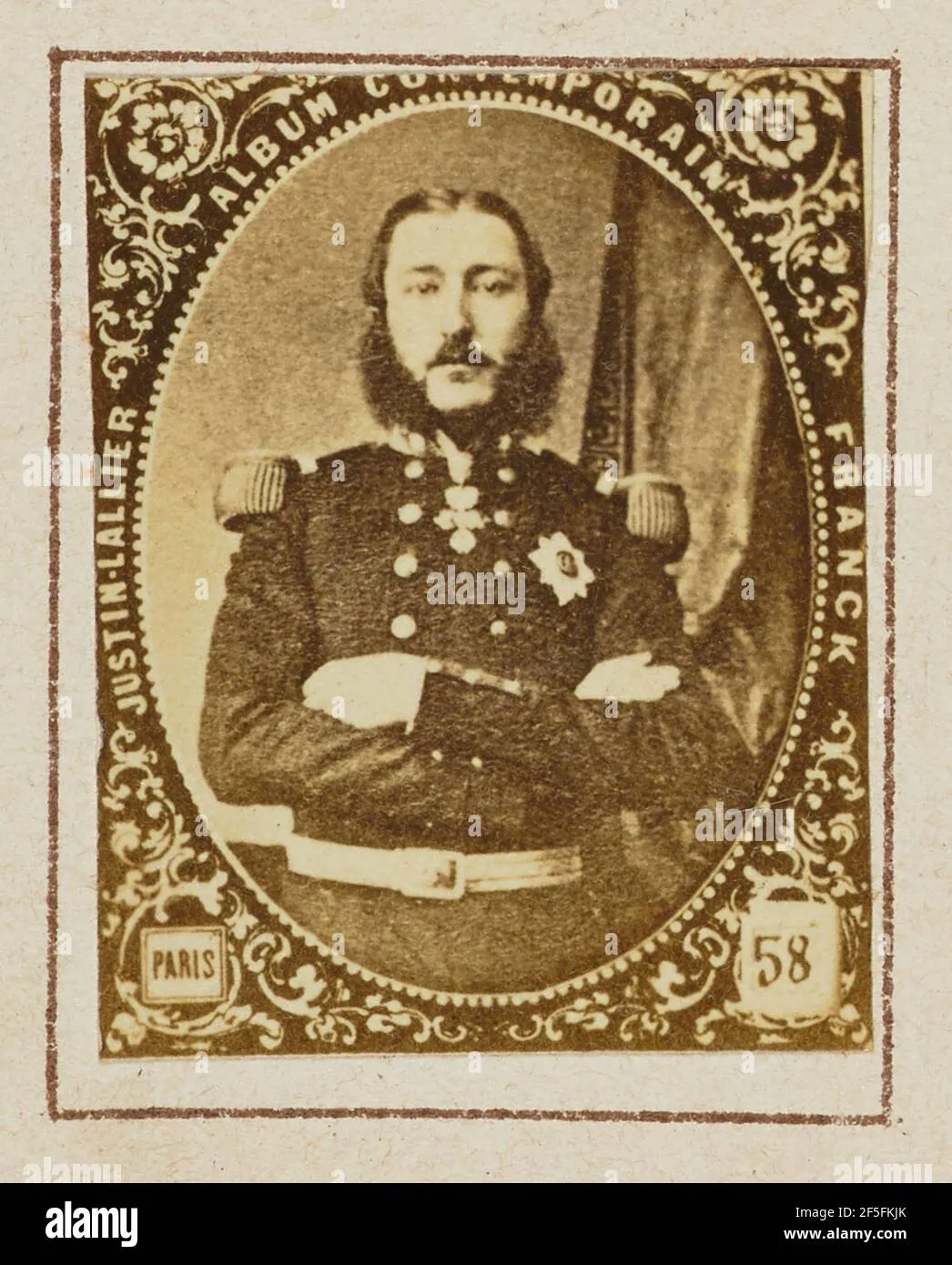 Photo: Leopold II of Belgium, via c8.alamy.com
The Congo Free State represented something unprecedented in corporate history—a company that owned not just the means of production, but the entire regulatory environment, the workforce, and the territory itself. It was, in essence, the ultimate company town, scaled to continental proportions. American business leaders did not replicate its methods wholesale, but they extracted its core innovations and applied them wherever local conditions permitted.
The Architecture of Total Control
Leopold's system rested on three foundational principles that would later appear throughout American industrial development. First, the elimination of worker mobility through debt bondage and geographic isolation. Second, the integration of enforcement mechanisms directly into corporate operations. Third, the use of quotas and performance metrics that incentivized maximum extraction regardless of human cost.
These principles found immediate application in American company towns from West Virginia coal mines to Pacific Northwest lumber camps. While American workers retained legal freedoms that Congolese laborers lacked, the economic structures were remarkably similar. Company stores created debt relationships that bound workers to their employers. Geographic isolation eliminated alternative employment options. Private security forces enforced company rules with minimal oversight from external authorities.
The Pullman Company's model town outside Chicago, operational during the same period as Leopold's regime, employed nearly identical control mechanisms. Workers lived in company housing, shopped at company stores, and attended company schools. When they struck in 1894, the company's response—economic pressure combined with private enforcement—mirrored tactics perfected in the Congo, minus the explicit violence.
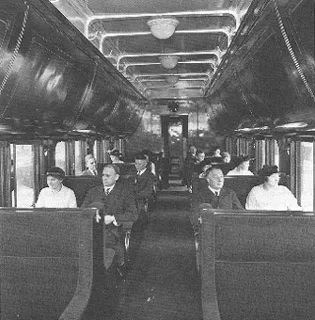 Photo: Pullman Company, via cruiselinehistory.com
The Quota System Innovation
Leopold's most influential innovation was the quota system that transformed human labor into a measurable commodity. Congolese villages were assigned rubber collection targets with severe penalties for shortfalls. This created a management structure that could scale extraction operations across vast territories while maintaining central control over productivity.
American industry adopted this framework with remarkable speed. Piecework systems in textile mills, tonnage requirements in steel production, and productivity standards in manufacturing all reflected the same basic logic—individual performance metrics that could be aggregated into corporate targets while shifting responsibility for meeting those targets onto workers themselves.
The psychological insight was profound: by making workers responsible for meeting quotas, companies could extract maximum productivity while maintaining plausible deniability about the human costs. If workers suffered under quota pressure, the system could claim they were simply failing to meet reasonable performance standards.
The Enforcement Integration Model
Perhaps the most sophisticated aspect of Leopold's operation was its integration of enforcement mechanisms into routine business operations. The Force Publique was not an external military force—it was an internal corporate security apparatus that operated under business rather than military logic. Its officers were evaluated on productivity metrics, not military effectiveness.
This model influenced American industrial security practices for decades. Company police forces in mining towns, factory security in industrial cities, and private detective agencies like Pinkerton all operated under similar hybrid authorities. They enforced company policies using quasi-governmental powers, creating a parallel legal system that prioritized corporate interests over worker rights.
The legal framework supporting these arrangements relied on property rights and contract law rather than explicit coercion. Workers "voluntarily" agreed to company rules, lived in company housing, and submitted to company justice. The system achieved many of the same control mechanisms as Leopold's more explicit regime while maintaining the fiction of voluntary participation.
The Visibility Problem and Its Solution
Leopold's regime ultimately collapsed not because its business model failed, but because its methods became too visible to international observers. The photographs of severed hands and documented atrocities created a public relations crisis that made the operation politically unsustainable. American industrialists learned this lesson carefully: the same control mechanisms could be maintained if their implementation remained less visible.
The solution was geographic and legal dispersion. Rather than concentrating all operations in a single territory, American companies spread their most exploitative practices across multiple jurisdictions with varying regulatory environments. Coal companies in Appalachia, agricultural operations in the South, and manufacturing in urban immigrant neighborhoods all employed elements of the Congo model while avoiding the concentrated visibility that had doomed Leopold.
This dispersion strategy also enabled legal innovation. Companies could experiment with different control mechanisms in different jurisdictions, identifying which approaches produced optimal results with minimal public scrutiny. Successful techniques could then be standardized and implemented more broadly.
The Modern Evolution
The fundamental insights of Leopold's system—total control through economic dependency, quota-driven productivity, and integrated enforcement—never disappeared from American business practice. They evolved into more sophisticated forms that achieved similar results through seemingly voluntary mechanisms.
Modern gig economy platforms employ updated versions of these same principles. Workers become independent contractors rather than employees, eliminating traditional labor protections. Algorithmic management systems create quota-like performance metrics with automatic enforcement. Geographic dispersion and legal complexity make collective action difficult while maintaining plausible deniability about working conditions.
The psychological mechanisms remain identical: individual workers bear responsibility for meeting system-generated targets while the platform extracts maximum value from their labor. The violence is economic rather than physical, but the control mechanisms operate on the same fundamental logic that Leopold pioneered.
The Institutional Legacy
What Leopold demonstrated was that extreme extraction could be systematized, scaled, and made profitable if the right institutional frameworks were established. American business did not need to replicate his methods exactly—they needed to understand the underlying principles and adapt them to different regulatory environments.
The result was a series of business innovations that achieved many of the same outcomes through more sophisticated means. Company towns, contract labor systems, and performance-based management all reflected insights derived from studying the Congo model. The human costs were distributed more broadly and made less visible, but the fundamental logic of maximum extraction through total control remained constant.
Understanding this continuity reveals why certain patterns of corporate behavior persist despite regulatory changes and public criticism. The techniques evolve, but the underlying incentive structure that Leopold made explicit continues to shape how businesses approach labor relations, productivity management, and regulatory compliance. The Congo Free State was not an aberration—it was a prototype that revealed possibilities American industry has been exploring ever since.