Hunger Markets: The Ancient Art of Profiting from Starvation
The Mesopotamian Model
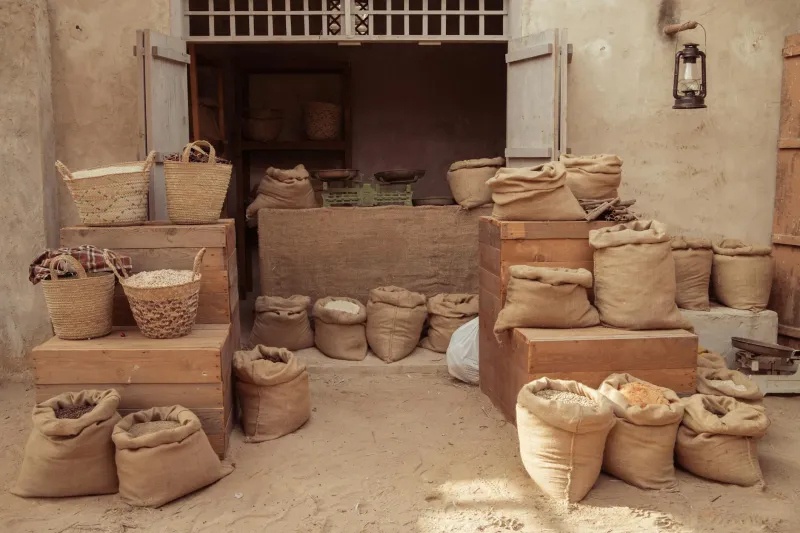
Four thousand years ago, Babylonian merchants perfected a business model so profitable and morally troubling that civilizations have been trying to regulate it ever since. During harvest seasons, these traders would purchase grain at low prices from desperate farmers, store it in vast warehouses, then release supplies during lean periods at multiples of their original cost. Clay tablets from Hammurabi's era record grain price variations of 2000% between abundance and scarcity — spreads that modern commodity traders can only dream of achieving.
 Photo: Hammurabi, via forums.civfanatics.com
The psychological dynamics driving these ancient markets remain unchanged. Farmers facing immediate financial pressure consistently undersell their crops, while consumers confronting potential starvation will pay any price for survival. Mesopotamian grain merchants understood that food demand exhibits perfect inelasticity at the extremes — people must eat regardless of cost. This insight created the world's first systematic arbitrage opportunity, one that human psychology guarantees will persist across millennia.
Rome's Regulatory Disaster
The Roman Empire's attempts to control grain speculation demonstrate how moral legislation often produces outcomes opposite to its intentions. Beginning under Emperor Diocletian, Rome implemented comprehensive price controls on essential foodstuffs, mandating death penalties for merchants who charged above official rates. The results were predictably catastrophic: legal grain markets disappeared, black market networks flourished, and food shortages intensified across the empire.
 Photo: Diocletian, via m.media-amazon.com
Roman price controls failed because they ignored fundamental economic realities that ancient merchants understood intuitively. When authorities set grain prices below market-clearing levels, supplies vanished from legal channels and reappeared in underground markets at even higher premiums. Farmers began hoarding crops rather than selling at government-mandated losses, while speculators developed sophisticated smuggling networks that added transportation costs and corruption premiums to final prices. The empire's attempt to eliminate profiteering instead created more profitable opportunities for those willing to operate outside legal boundaries.
The Medieval Guilds' Monopoly System
Medieval Europe approached grain speculation through guild-controlled monopolies that granted exclusive trading rights to politically connected merchants. These systems promised stable supplies and fair prices through regulated competition, but instead created opportunities for coordinated market manipulation that individual speculators could never achieve. Guild members would collectively withhold grain during harvest seasons, creating artificial scarcity that justified premium pricing throughout the year.
The guild model reveals how institutional responses to speculation often amplify the problems they're designed to solve. By concentrating grain trading among small groups of merchants, medieval authorities eliminated competitive pressures that might have moderated price swings. Guild members could coordinate their activities more effectively than independent traders, enabling market manipulation on scales that individual speculators couldn't accomplish. When harvests failed, these cartels possessed both the inventory and market power to extract maximum profits from public desperation.
Chicago's Futures Revolution
The 19th century Chicago Board of Trade transformed grain speculation from a seasonal cottage industry into a year-round financial enterprise. Futures contracts allowed traders to bet on crop prices months before harvests, creating new opportunities for speculation while ostensibly reducing market volatility. The system attracted global capital to agricultural markets, but also enabled manipulation campaigns that dwarfed anything medieval guilds had attempted.
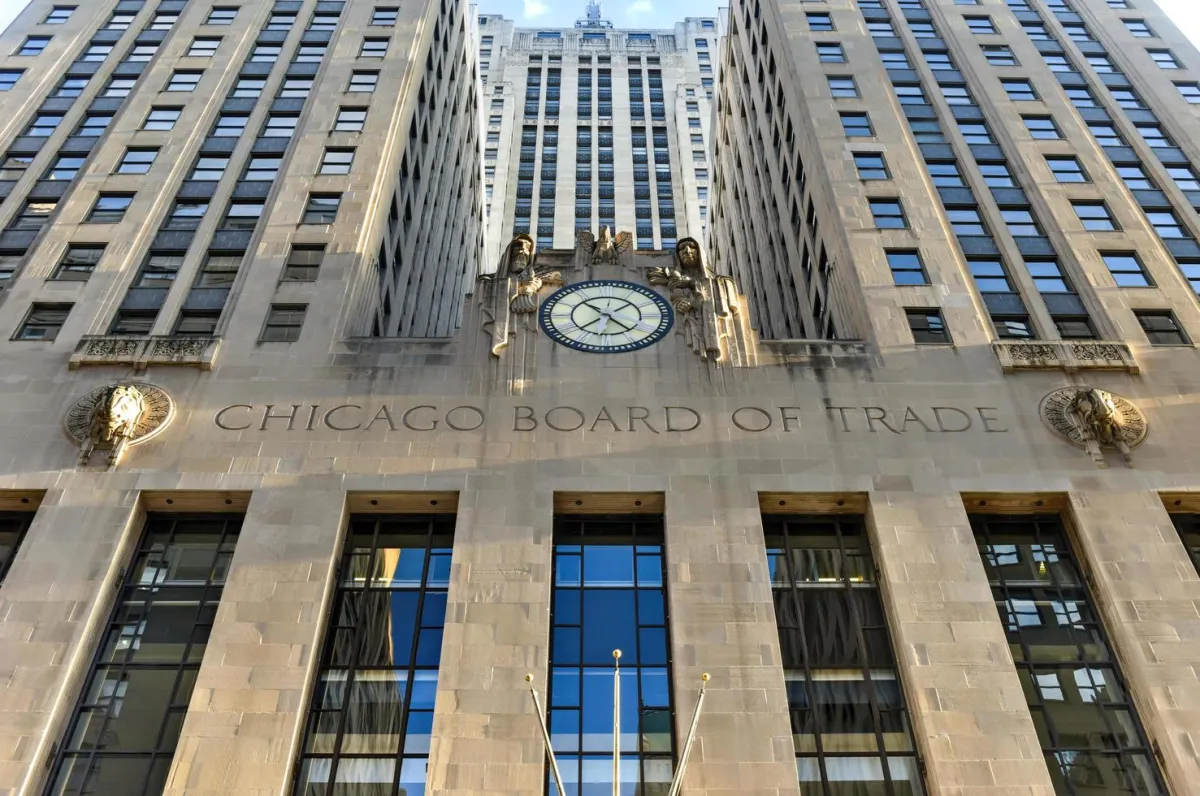 Photo: Chicago Board of Trade, via static.vecteezy.com
Chicago's grain markets during the Irish Famine exemplified how financial innovation can amplify humanitarian disasters. As potato crops failed across Ireland, futures traders in Chicago drove wheat prices higher by spreading rumors about American crop failures and European demand surges. These artificial price spikes made it economically impossible for relief organizations to purchase sufficient grain for famine victims, demonstrating how speculative markets can transform regional agricultural problems into international humanitarian catastrophes.
The Modern Commodity Complex
Contemporary grain speculation operates through derivatives markets that would have amazed Babylonian merchants but follows identical psychological principles. During the 2007-2008 food crisis, commodity index funds poured hundreds of billions of dollars into agricultural futures, driving wheat, corn, and rice prices to historic highs while global grain inventories remained adequate to meet demand. The price increases triggered food riots across developing countries and pushed an estimated 100 million people into poverty.
Modern commodity speculation demonstrates how technological sophistication can mask ancient psychological patterns. High-frequency trading algorithms now execute grain trades in microseconds, but they respond to the same fear and greed impulses that motivated Mesopotamian merchants. Financial derivatives allow speculators to control vastly more grain than they could physically store, but the underlying strategy remains unchanged: buy when supplies appear abundant, sell when scarcity creates desperation.
The Regulatory Whack-a-Mole Game
Every major civilization has attempted to regulate grain speculation, and every regulatory regime has ultimately failed to eliminate the practice while often making its effects more severe. Ancient Rome's price controls created black markets. Medieval guilds enabled cartel behavior. Modern position limits on commodity futures simply shifted speculation to unregulated derivatives markets. The pattern suggests that prohibiting profitable activities without addressing their underlying economic functions merely drives them into less transparent channels.
The regulatory failure rate approaches 100% because lawmakers consistently misdiagnose the problem. Grain speculation isn't an aberrant behavior that can be eliminated through proper incentives — it's a rational response to structural features of agricultural markets that no regulatory framework can alter. Crop yields fluctuate unpredictably, storage capacity remains limited, and consumers must purchase food regardless of price. These conditions guarantee arbitrage opportunities that some market participants will exploit.
The Psychology of Moral Hazard
Famine profiteering persists across millennia because it exploits a fundamental asymmetry in human psychology. The pain of starvation motivates immediate action at any cost, while the benefits of abundant food create only modest satisfaction. This psychological imbalance ensures that merchants can extract enormous profits during shortages while earning only normal returns during surplus periods. The emotional intensity of hunger overwhelms rational price sensitivity, creating market conditions that speculators can manipulate with predictable success.
The moral hazard becomes self-reinforcing as societies attempt to prevent speculation through government intervention. When authorities promise to provide emergency food supplies during crises, private actors have reduced incentives to maintain adequate inventories, making shortages more likely and more severe. Grain merchants understand that government relief efforts typically arrive too late to prevent price spikes, creating windows of opportunity for extraordinary profits before official intervention begins.
The Unlearnable Lesson
The four-thousand-year history of grain speculation offers a sobering lesson about the limits of moral legislation in markets where survival needs intersect with profit opportunities. Every civilization discovers the same uncomfortable truth: attempting to prohibit profitable activities that serve genuine economic functions typically makes those activities more profitable while driving them underground. The pattern suggests that grain speculation represents not a regulatory failure but a permanent feature of markets where essential goods meet unpredictable supply conditions.
Modern policymakers continue proposing solutions — strategic reserves, position limits, transaction taxes — that previous civilizations have already tested and abandoned. The repetition suggests that each generation must rediscover the impossibility of legislating away market forces that emerge from basic human psychology. Grain speculation will persist as long as crops fail unpredictably and people prefer eating to starving, regardless of how many laws attempt to prevent it.